
Featured Raschel Lace Selections
A curated view of raschel lace styles selected to reflect different levels of openness, motif structure, and garment use potential.
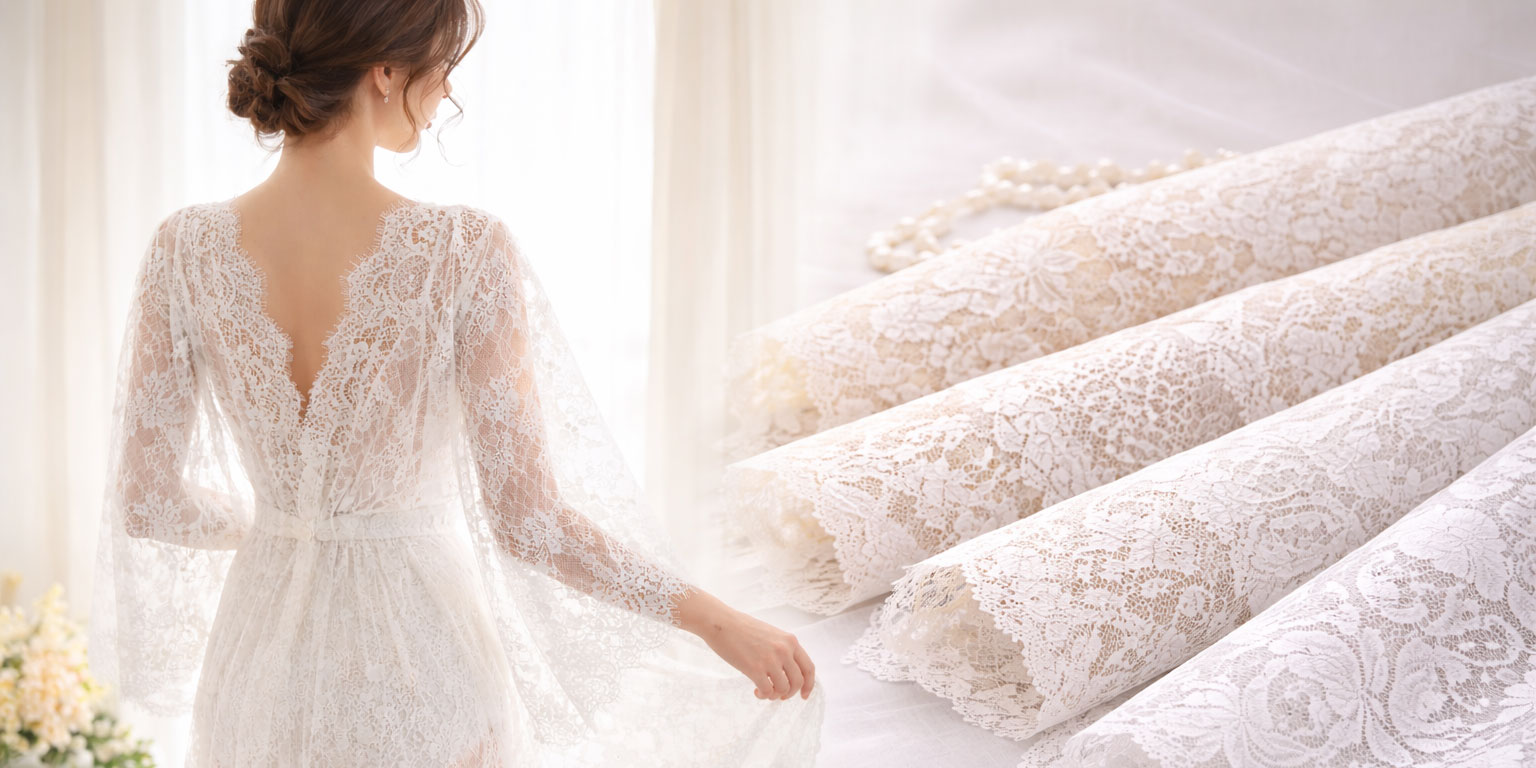
Raschel Lace Fabrics
Explore raschel lace fabrics selected for lighter lace surfaces, openwork construction, layered styling, and decorative apparel development across fashion, bridal, and detail-driven garment categories.
WELLLACE’s raschel lace fabrics category focuses on lace directions where pattern openness, lighter construction, and decorative surface texture play a central role. Compared with embroidery-led materials, raschel lace often brings a different balance of softness, repetition, and lace identity across the fabric surface.
Includes
In this category, product selection is often shaped less by embroidery technique and more by visual openness, handfeel, edge effect, and how the lace behaves in garment use.
Raschel lace is often selected for how clearly the pattern reads across the surface, especially when the design needs visible lace identity without the density of heavier embroidered constructions.
Many raschel lace directions are chosen for garments that benefit from lighter drape, transparent structure, or layering effects where the lace remains visually present without overwhelming the silhouette.
In some styles, the visual value of raschel lace also comes from the edge — whether the direction calls for a cleaner finish, a softer outline, or a more decorative scalloped effect.
The current range can be explored through several common lace directions depending on garment use, visual density, and finish preference.
Lace surfaces where the visual pattern extends across the full fabric width for dresses, overlays, panels, and broader garment coverage.
Raschel lace directions selected when the garment requires more flexibility, easier body movement, or a softer fitted result.
Lace styles with stronger outline definition or a more visible motif structure for products that need clearer pattern presence.
Lace directions where border effect, edge movement, or decorative finishing plays a stronger role in the material selection.
Raschel lace fabrics are typically used where the garment needs visible lace texture, lighter construction, or layered decorative effect rather than heavy embroidery-led surface density.
01
For lace-led garment surfaces, outer layers, sleeve directions, and panel treatments where openness and drape matter.
02
For products that need a refined lace look, decorative transparency, or a softer romantic surface direction.
03
For garment areas where lace is used to create contrast, openness, or a more detailed visual break within the design.
04
For development lines where lace is not just an accent, but one of the materials shaping the overall product character.
A curated view of raschel lace styles selected to reflect different levels of openness, motif structure, and garment use potential.
Continue exploring the full raschel lace range below.
Raschel lace fabric directions selected for lighter lace surfaces, openwork construction, layering effects, and decorative garment use. This category supports fashion, bridal, and apparel developments where lace texture, openness, and edge character play a central role.

Tell us what you are developing — all-over lace, stretch raschel lace, scalloped edge styles, softer lace textures, or reference images — and we can help you identify suitable options from our raschel lace fabrics range.